64°08′ N, 21°56′ Wfn. 14 — see Voigt, 2024declensionhalló · halloo · salut§ 04 · identity
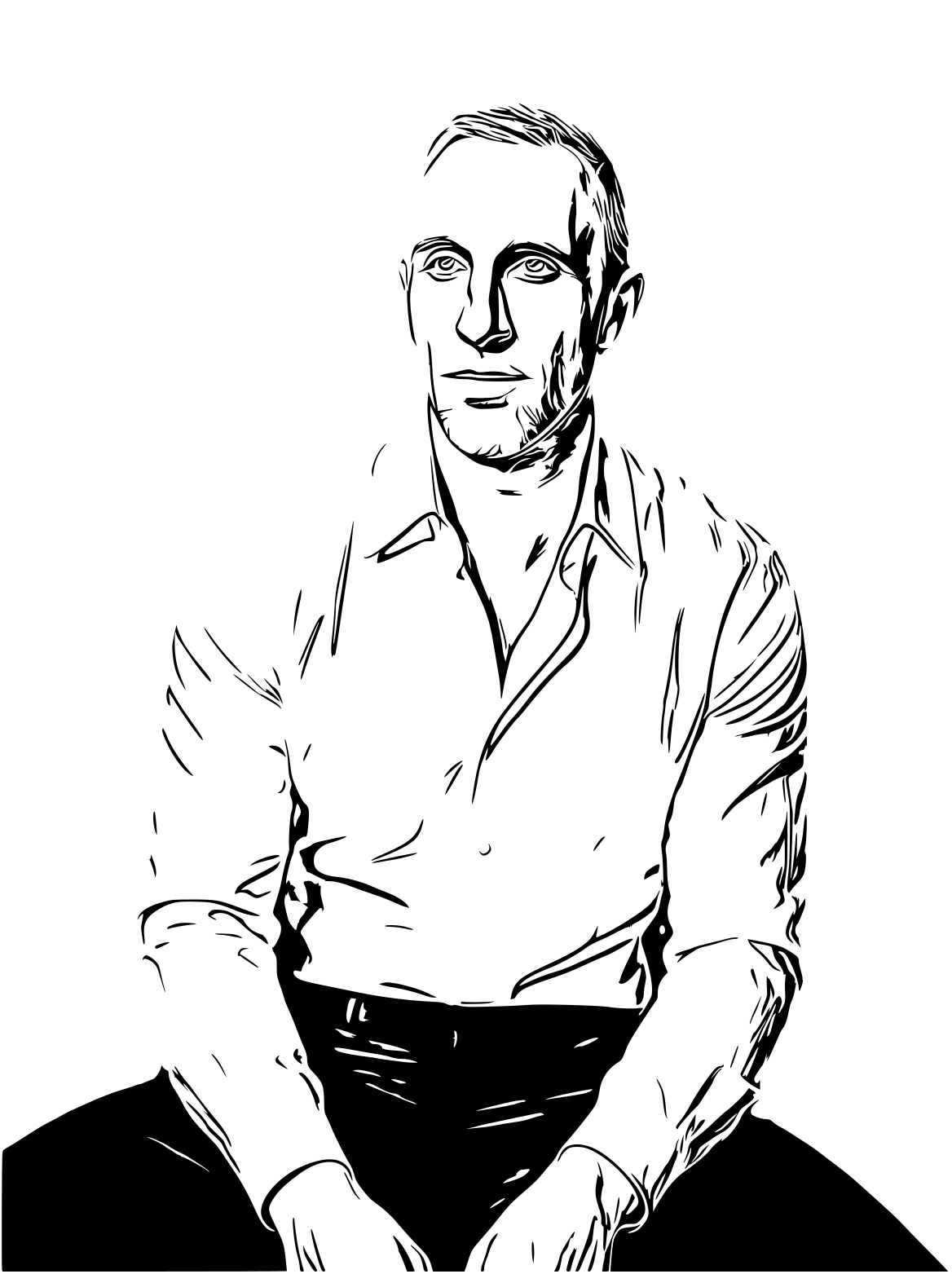
Ryan J. PylesAuthor · Engineer · LinguistChicago
I write experimental fiction as Elian Voigt and build narrative systems through FORMÆTRIX.
The distance between a manuscript, a language, and a software system is smaller than it first appears.
Ryan Pyles — Chicago
Ryan J. Pyles writes experimental fiction as Elian Voigt, runs FORMÆTRIX as a design and systems studio, and studies twelve languages. This site is the personal archive behind all three.
Three bodies of work. One origin point. Begin with whichever axis pulls first.
Ryan Pyles is the maker. FORMÆTRIX is the studio. Elian Voigt is the literary identity.
The Maker
Ryan Pyles
Author, engineer, linguist, and designer based in Chicago. The common origin point behind FORMÆTRIX and Elian Voigt. The work across all three disciplines begins from a single question: what is the minimum necessary to make something hold?
Design and systems work for publishers, authors, and organizations where form and language are inseparable from function. Publishing infrastructure, identity systems, editorial web architecture. Selected engagements.
Design systems, publishing infrastructure, editorial web architecture.
Six published novels in a shared formal universe, with three more forthcoming. Experimental and speculative fiction that proposes a structure — a grammar, a legal brief, an archive of measurement — then inhabits it until it produces something the structure alone could not predict.
A visual story-memory architecture for authors working with AI. Characters are modeled as evolving states rather than static biographies. Voice is measured as a fingerprint, not described as a style guide. Designed for novels, game narratives, television writers’ rooms, and any story larger than human working memory.
Six published novels under the Elian Voigt name, with three more forthcoming. Literary fiction in a shared formal universe — not connected by plot, but by recurring structural tensions. Systems that become belief. Languages that reshape their speakers. Grief treated as investigation.
Short fragments written close to the moment — observations, structural curiosities, and language notes before they settle into something more considered.
Icelandic has a word for weather that looks beautiful through a window and punishes you the moment you step into it. I've started keeping a list of ideas that work the same way — gorgeous from inside the frame, unlivable once you cross the threshold.
Somewhere between the macro expansion and the rendered glyph, a document stops being yours. LuaLaTeX just makes the nerve endings visible — every \def a synapse firing in the dark, long before anything reaches the page.